


Better elective surgery starts with smarter list planning.
With Tetra.
Tetra uses AI to help hospital teams build the best surgical lists possible, accelerate RTT targets, and reduce manual work - all without adding theatre capacity.
Built for waiting list teams, theatre managers and operational leaders under pressure to deliver more activity, make better use of theatre time, and reduce avoidable cost.




.png)
how it works
Advanced modelling, built for the reality of theatre booking
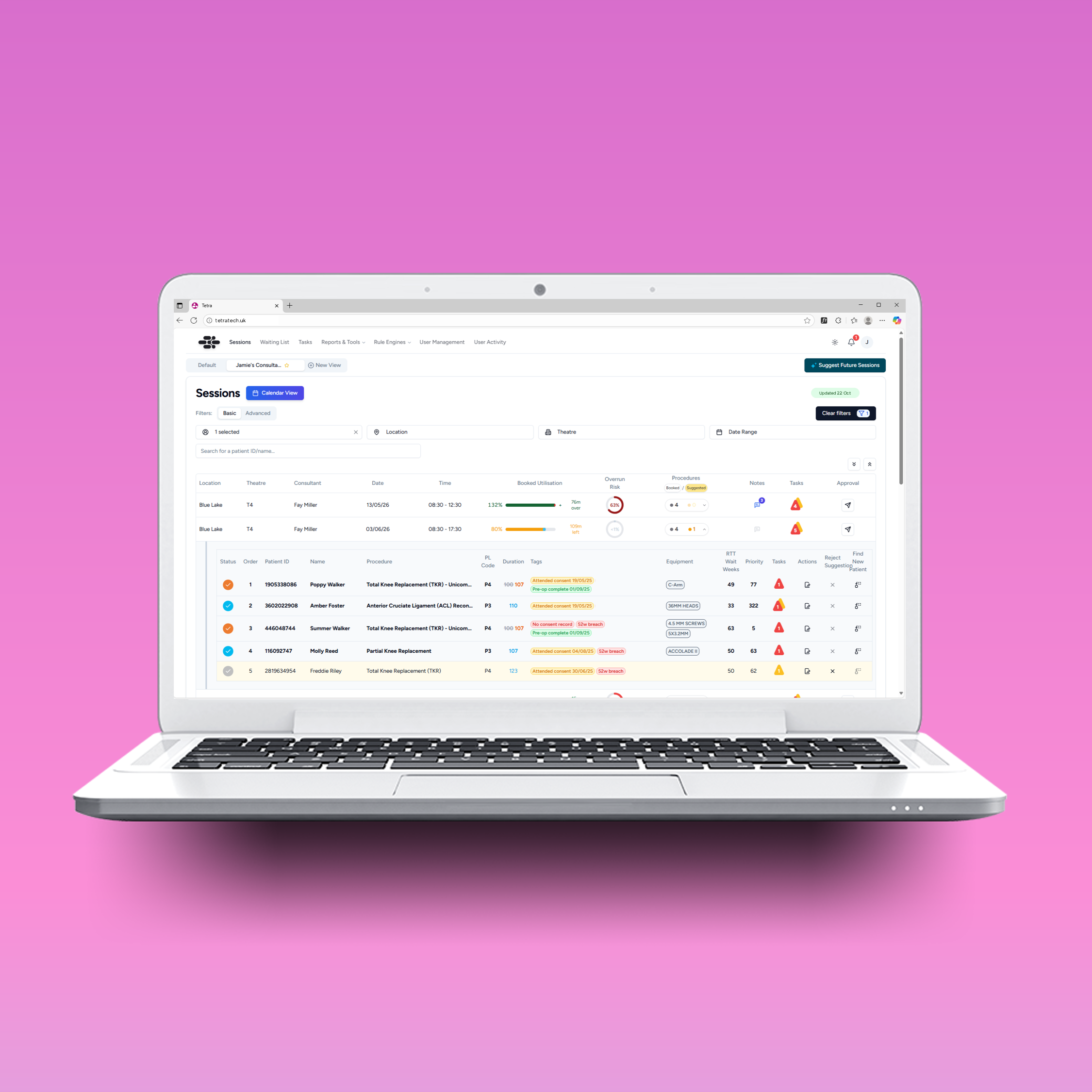
Tetra combines real clinical context, local data and surgeon-specific patterns to predict what a list will really take - then helps teams build lists that make better use of the session in front of them.
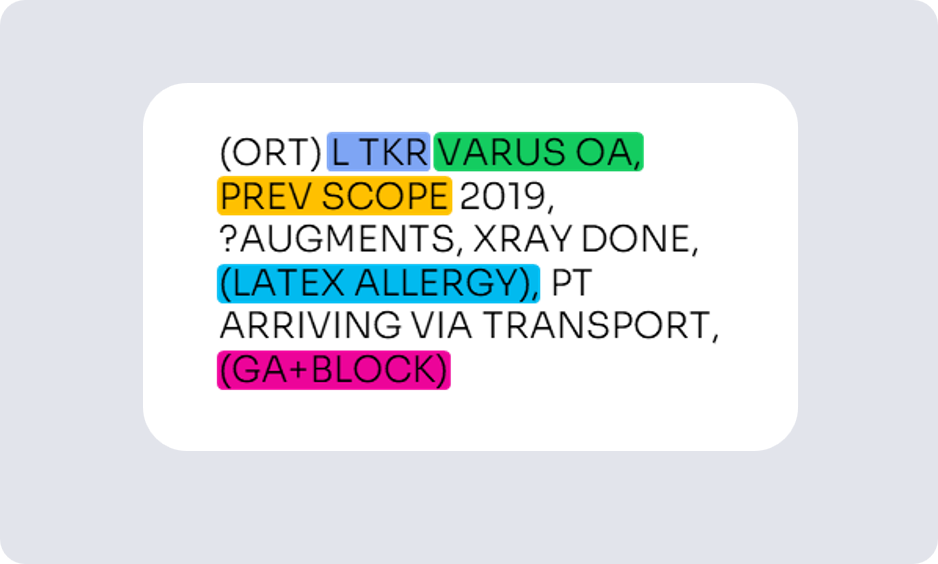
Understand the procedure, not just the OPCS code
Tetra reads the free text describing the planned surgery, capturing nuance and complexity that standard coding alone misses. It learns habits, conventions and nuances across your data.
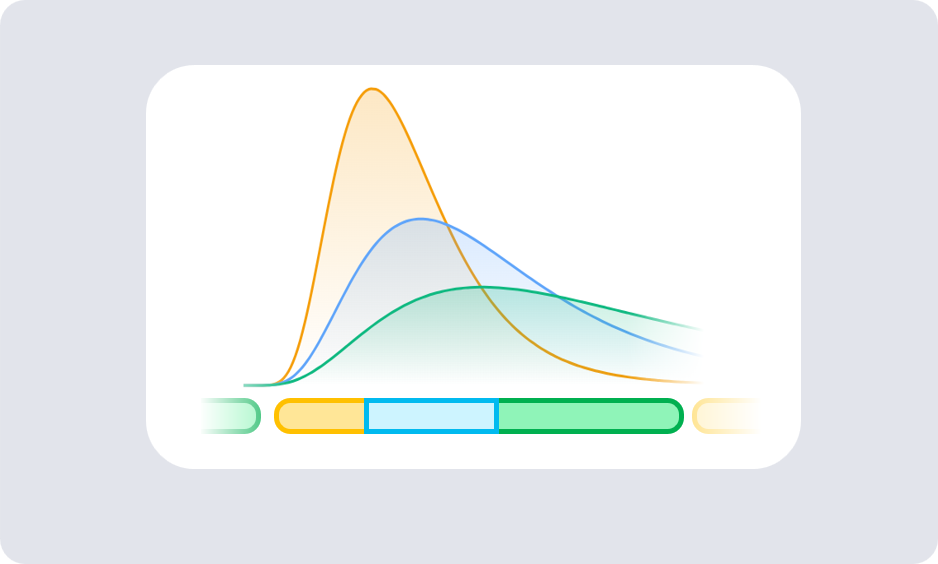
Predict realistic procedure times using local data
Our models estimate total list time - individually analysing anaesthetic, operative and handover components for each case - using surgeon history and patient characteristics from an organisation’s own data.
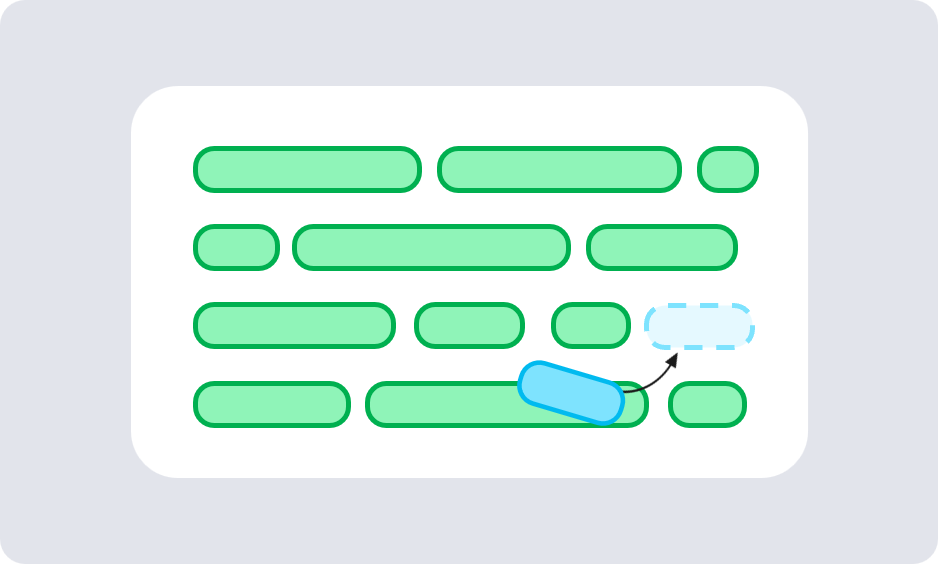
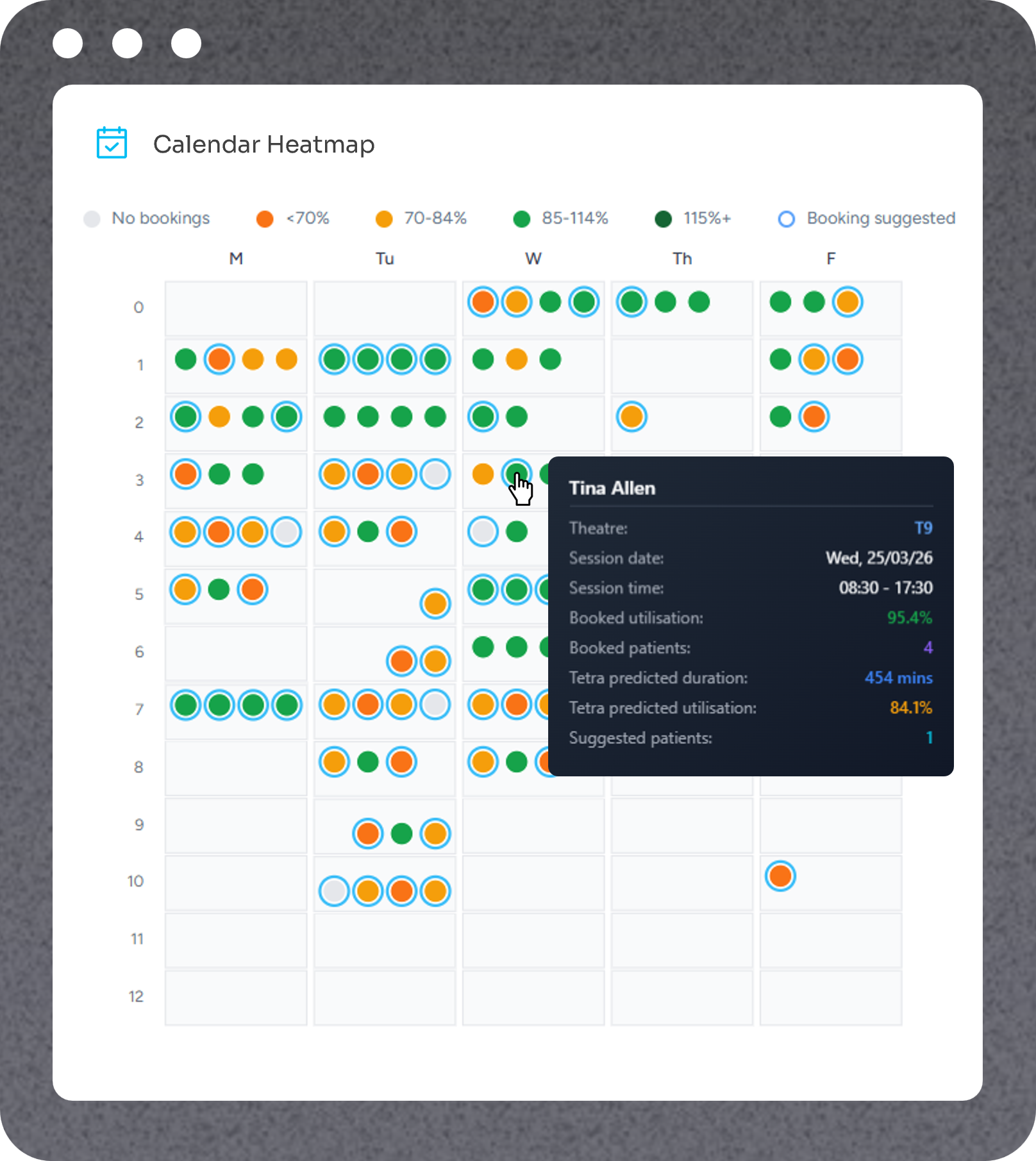
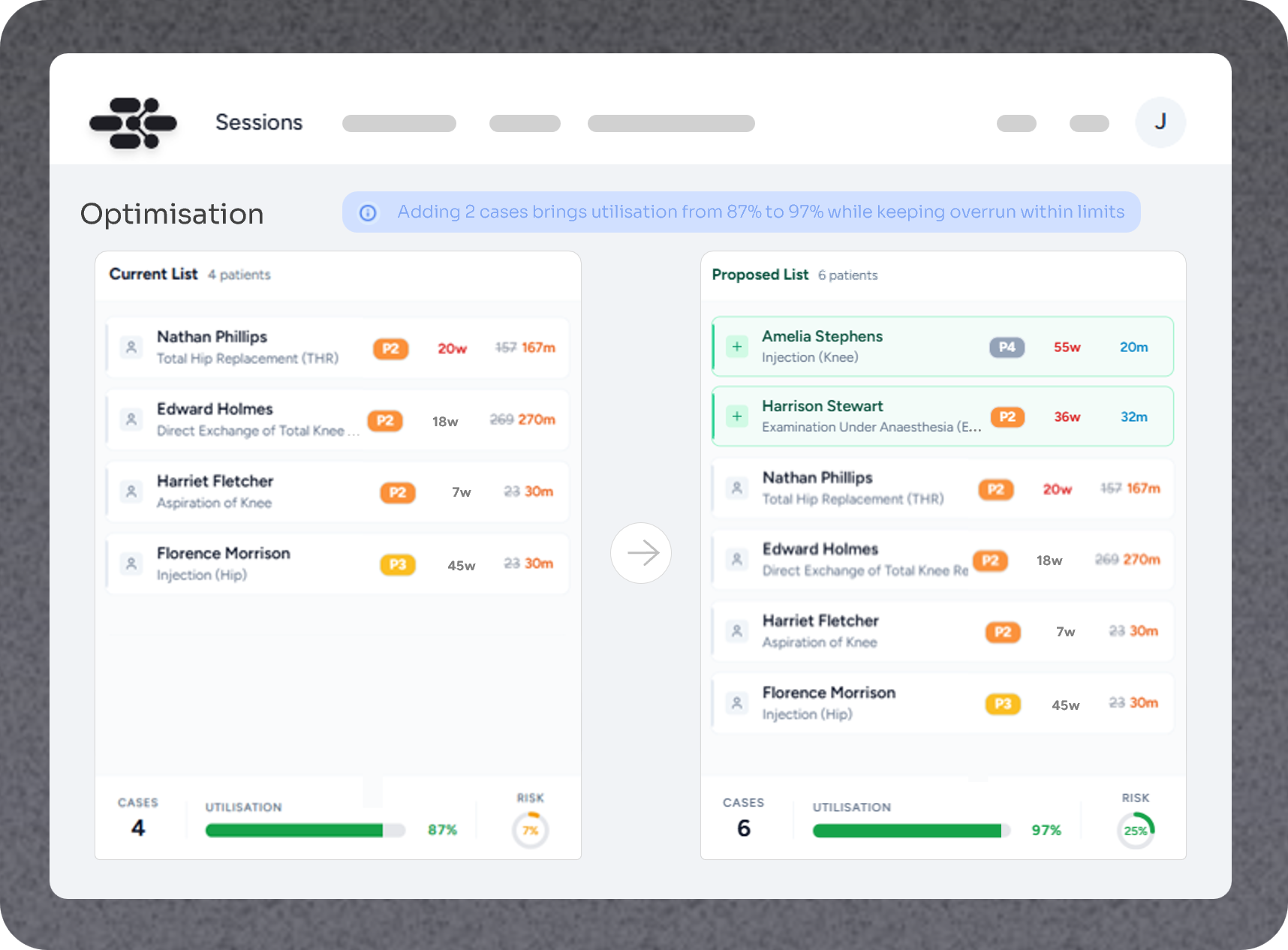
Recommend the right patients for each list in real time
With your local booking rules and practises built-in, Tetra instantly suggests suitable patients to your sessions, so teams can make the right decision instantly. Reacting to cancellations, filling a last minute slot, or deciding which list to run next are simple.
Surgery is hard enough.
Planning it shouldn't be harder.
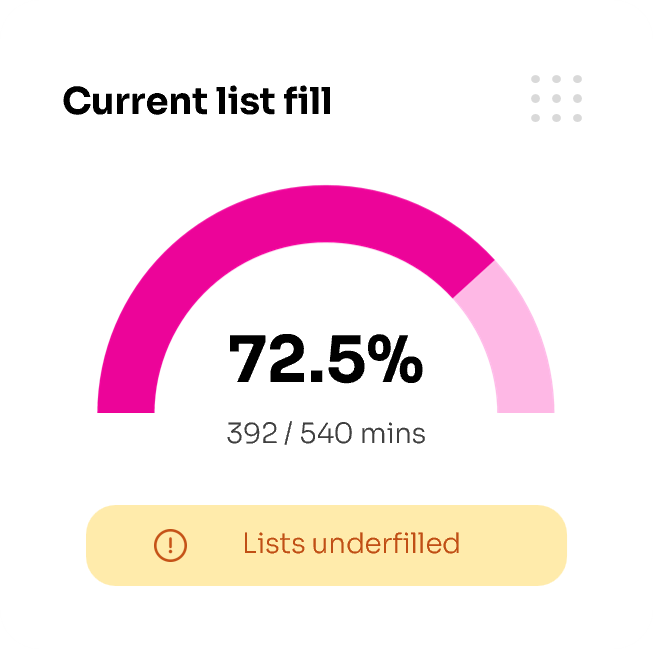
Building safe, efficient operating lists is a constant balancing act between capacity, complexity, cancellations and waiting time pressures. Most teams book with incomplete information, use manual workarounds and rely on rough estimates.

Inaccurate list planning: Crude estimates and manual judgement lead to overbooked lists, underruns and avoidable wasted capacity.
Too much admin to fill and rework lists: Teams spend too long finding suitable patients, reshuffling lists and reacting to changes by hand.
Constant disruption from late changes: Cancellations, delays and shifting constraints force repeated rework across the schedule.
why teams use tetra
Build safer, fuller, more predictable theatre lists
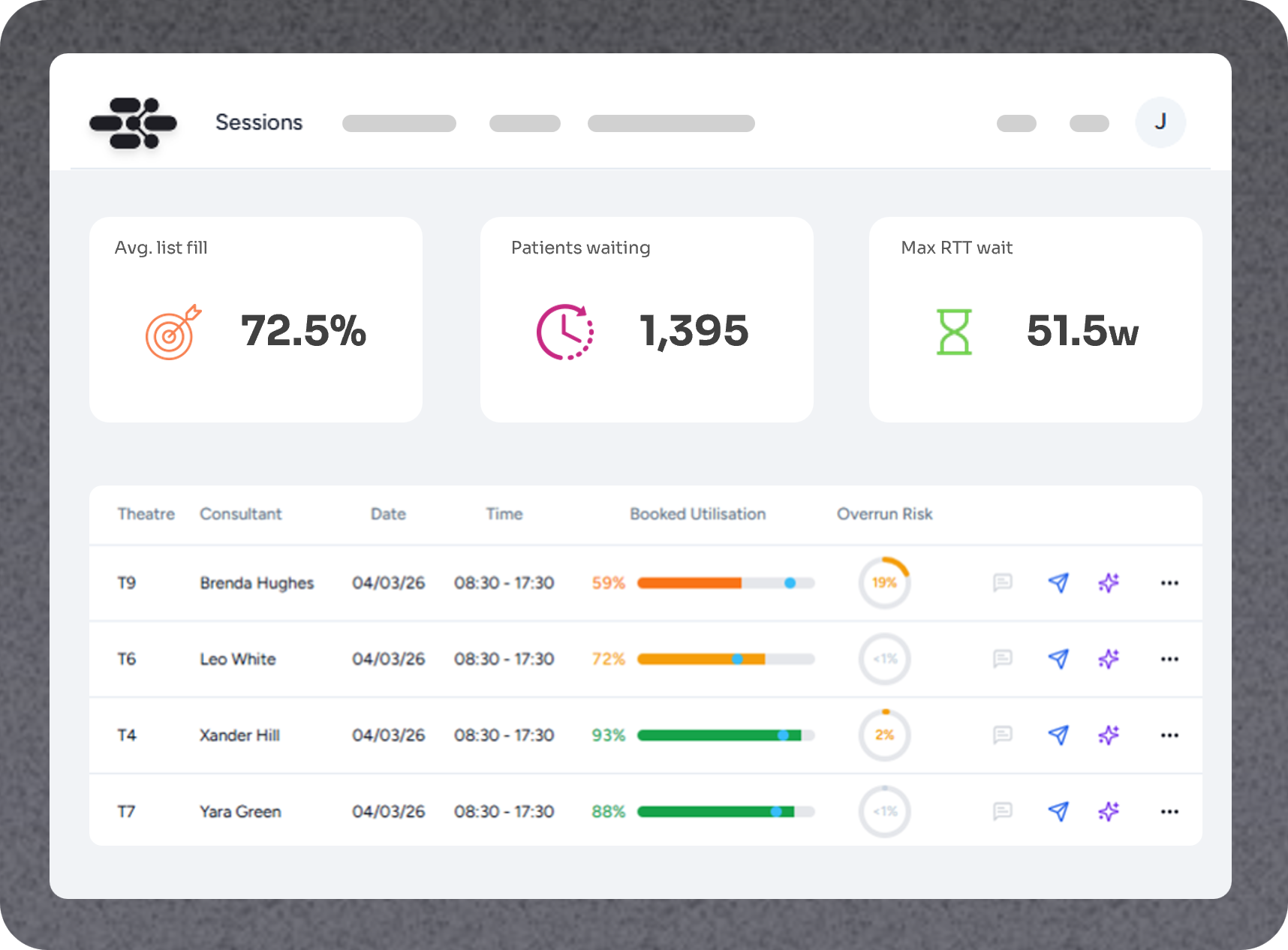
Tetra helps teams make better decisions, faster - reducing wasted capacity, admin burden and pressure on elective performance.

Reduce over- and underruns
Build lists with better time predictions, so sessions are less likely to finish too early, run late or waste valuable theatre time.

Cut scheduling and rebooking time
Help teams fill lists faster and respond to cancellations or changes without starting from scratch.

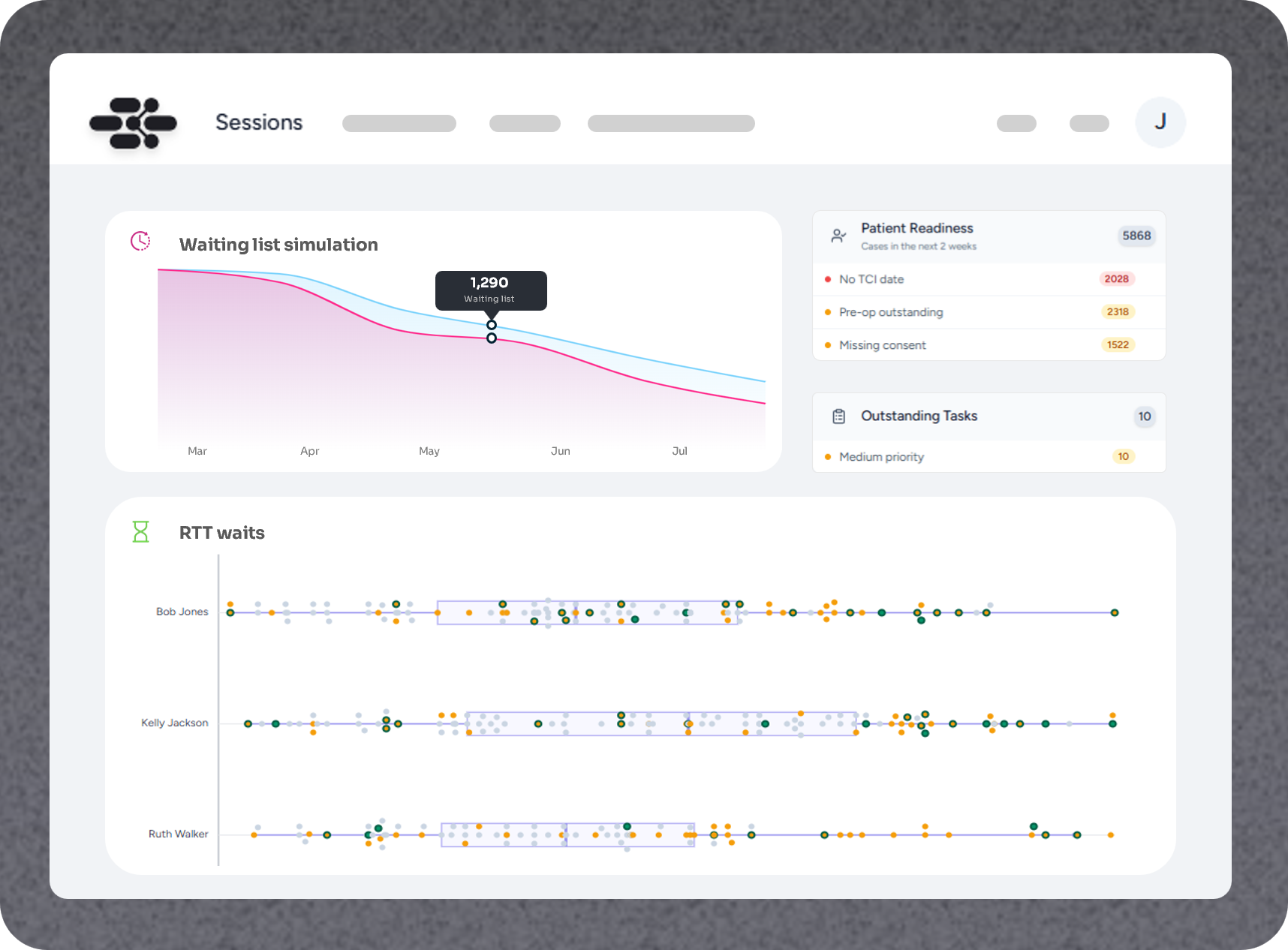
Support elective recovery and RTT performance
Make better use of available capacity and move patients into the right lists sooner, with less friction.

Deployment
Start quickly using data every Trust produces
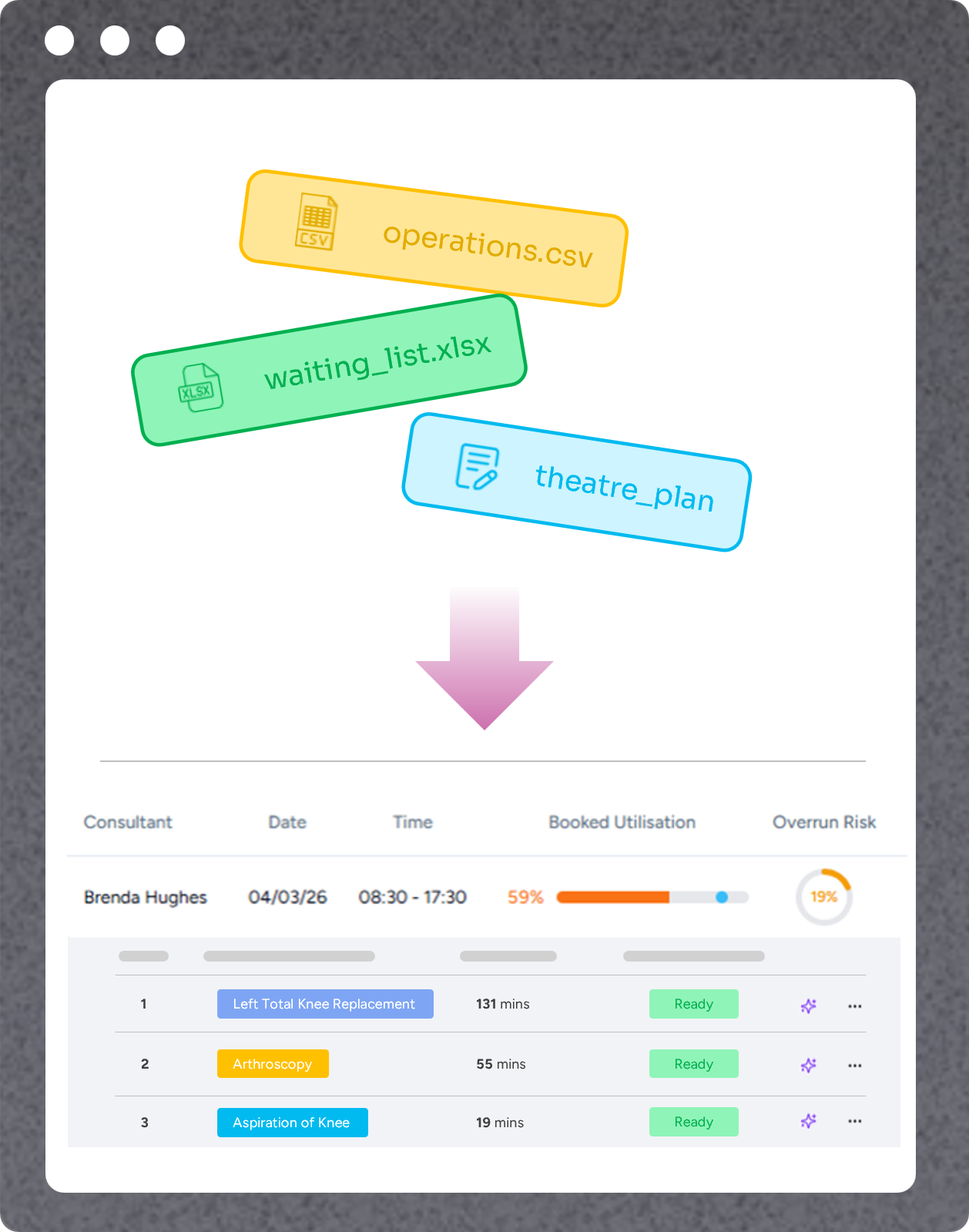
You do not need a heavy EPR integration to get value from Tetra. We work from standard data sources that organisations already produce, with optional deeper integration when it makes sense.
Works from standard data exports: Built to use simple operational data that hospitals already hold, rather than depending on perfect system architecture.
No mandatory EPR integration: Start without a major integration programme. Connect more deeply later only if it makes sense.
Practical rollout for busy teams: Designed for real booking teams, with implementation shaped around local operational workflows, rather than adding another layer of complexity.
Whats built in
More than scheduling. Built to optimise theatre capacity.
Tetra gives operational teams the tools, data and flexibility to make the best decisions and react to an constantly-changing waiting list, instantly.

Procedure-level understanding that goes beyond OPCS codes
.svg)
AI-enhanced elective demand and capacity modelling

Surgeon- and site-specific timing models

Configurable to the way your trust books theatres

Decision intelligence that considers the whole waiting list in seconds

Secure cloud deployment with minimal integration burden
faq
About the platform
Who is Tetra designed for?
Tetra is designed for the teams involved in planning and coordinating elective surgery, including waiting list coordinators, theatre managers, service managers and operational leaders. It is built to support the people making day-to-day booking decisions, while also giving managers better visibility over how theatre capacity is being used.
How long does deployment usually take?
Typically 4–7 weeks from kickoff to first use. This includes data setup, model calibration using your local data, and onboarding your team. Timelines can vary slightly depending on data availability and internal approvals, but we’re designed to get you live quickly without a heavy implementation.
Will Tetra force us to change our existing workflows?
No. Tetra is designed to improve how teams make decisions within real hospital workflows, not impose a completely new model. We recognise that local ways of working often exist for good reasons, so deployments are designed to fit around what already works as well as improve what does not.
Data, safety and implementation
What data does Tetra need to work?
Tetra uses existing operational data relevant to surgical planning, such as waiting list information, procedure details, historic case durations, and session's planned. Tetra has been designed for hospital environments with patchy or poor quality data, so your data does not need to be perfect to see value.
Is Tetra clinically safe?
Tetra is designed to support operational decision-making, not replace clinical judgement. Clinical safety and governance are taken seriously in how the system is designed, assessed and deployed. All decisions are human-in-the-loop, and the platform has been designed to empower consultant decision making, not automate it.
Does Tetra need to integrate with our EPR or PAS to be useful?
No. Tetra is designed to work alongside existing systems, and outputs can be delivered without deep integration. Where organisations are open to integration, Tetra has been built to be compatible - we work with you to find the lightest and most practical approach.
Cost, value & buying
How is Tetra priced?
The price of Tetra varies with the number of theatres you have and the volume of surgery being performed, with the price per theatre reducing significantly with increased volumes. At all levels, Tetra only requires a modest improvement in efficiency to provide a significant return on investment.
What kind of value should a trust expect?
Theatres cost an estimated £20 per minute to run, equating to more than £2.3 million per year per theatre. Even small improvements in how they’re used translates into significant value.
We expect all organisations to achieve a significant return on investment, regardless of their size and current performance.
We expect all organisations to achieve a significant return on investment, regardless of their size and current performance.
How much work is required from our teams during setup?
We aim to keep the setup process practical and lightweight. That usually means working with the right operational and digital stakeholders to understand your workflow, review available data and test outputs, without creating unnecessary burden for frontline teams.
insights & news
Our latest upates & content


See how much more your theatres could deliver
Book a demo and see how Tetra helps teams plan surgical lists more effectively

© Tetra AI 2026. All rights reserved. Tetra AI Ltd. 16286167, 71-75 Shelton St., London WC2H 9JQ
All platform data shown is notional and randomised, and does not represent real patient data.
All platform data shown is notional and randomised, and does not represent real patient data.
